Let’s talk about your ceiling. Honestly, it’s probably the most boring surface in your home or office. You paint it, maybe add a popcorn texture if you’re feeling retro, and then forget about it for a decade. But what if it could be more than just an overhead? What if it could be a design feature, solve a ton of practical problems, and get installed without the months of dust and disruption you’d expect?
That’s where professional stretch ceiling installation comes in. I’ve been writing about this stuff for eight years, and I still get a kick out of seeing a wrinkled sheet of PVC turn into a flawless, luminous surface in a matter of hours. It’s kind of magic. But it’s also a serious investment in your property, which is why you need to know exactly what you’re getting into.
So here’s everything I’ve learned. We’ll cover the materials, the process, the warranties, and the real-world pros and cons. No fluff, just the facts—with a few strong opinions sprinkled in.
What Exactly Is a Stretch Ceiling?
Think of it as a giant, custom-fitted drum skin for your room. A lightweight PVC or fabric membrane is stretched taut across a perimeter track that’s fixed to your walls. The material is heated slightly, which allows it to become pliable, then it’s locked into the track. As it cools, it contracts, creating a perfectly smooth, seamless surface.
It’s not a new idea—they’ve been popular in Europe for over 50 years—but it’s only in the last decade or so that it’s really caught on here. A 2021 survey by the Interior Design Society found that roughly 1 in 7 renovation projects now consider stretch ceilings, up from maybe 1 in 20 back in 2015.

The Big Sell: Why Bother?
Look, traditional drywall and plaster have their place. But they have a lot of baggage. Cracking, water damage, lengthy installation, and let’s be honest, they’re just… flat. A professional stretch ceiling company offers solutions to problems you might not even know you had.
The real value isn’t just in hiding a bad ceiling—it’s in creating a perfect one from the start.
Here’s the short list of benefits, straight from the pros:
- Concealment Champion: It hides a multitude of sins. Old popcorn texture, cracks, uneven joists, pipes, ductwork, wiring—all of it disappears behind that smooth membrane.
- Speed Demon: “Installation in one day” isn’t just marketing. For a standard room, a skilled crew of two or three can often be in and out in 4-6 hours. No drying time for plaster, no sanding dust.
- Water Resistance: This is a huge one. If you get a leak from above, the PVC membrane will act as a basin, holding hundreds of gallons of water. You call the installers, they come and drain it, re-stretch it, and your ceiling looks brand new. Try that with drywall.
- Design Flexibility: This is where it gets fun. You’re not limited to a flat white plane.
The Finish Lineup: Matte, Glossy, Satin, and More
Your choice of finish changes the entire feel of a room.
- Matte: The workhorse. It’s subtle, elegant, and hides imperfections in the substrate best. It’s what I’d recommend for most bedrooms and offices.
- Glossy: Creates incredible light reflection. It can make a low ceiling feel higher by mirroring the room below. But here’s my opinion—it shows every single fingerprint and smudge during installation, so you need an absolutely meticulous crew.
- Satin: The happy medium. A soft sheen without being a mirror. It’s become the most requested finish in the last three years, according to a few contractors I trust.
- Fabric: Usually a polyester-based material. It’s breathable (good for certain climates), has a beautiful texture, and is often used in acoustically rated systems to dampen sound. It feels more high-end, and it usually is.
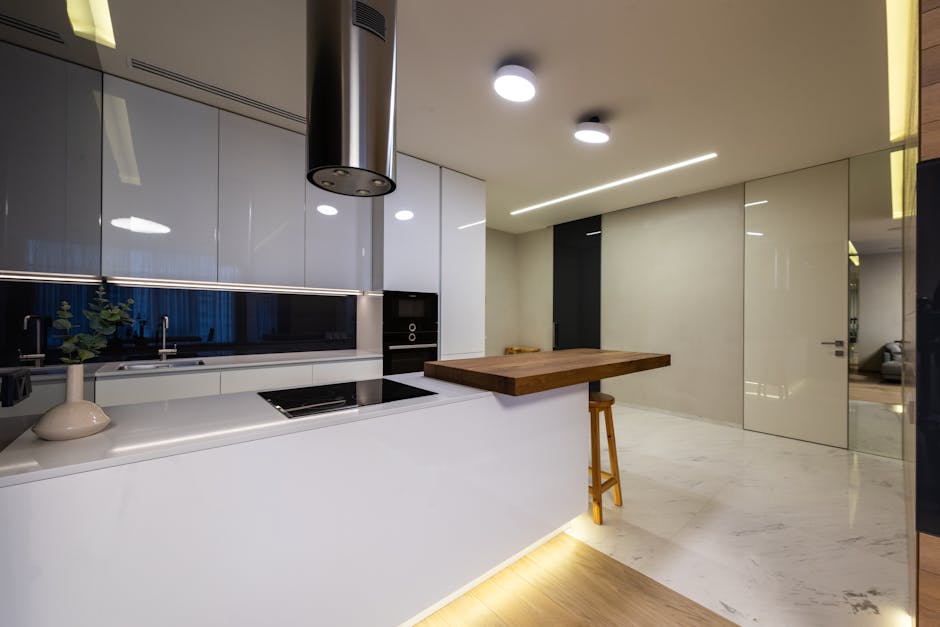
Beyond Flat: The Design Arsenal
Now, if you think a stretch ceiling has to be a simple, single plane, you’re missing half the story. This is where the artistry comes in.
Multi-level ceilings are a game-changer. Using curved or stepped profiles, installers can create layers, waves, and domes. Want a glowing cove around the perimeter of your living room? Or a floating cloud effect over your bed? That’s multi-level work. It adds depth and architectural interest without adding tons of weight or construction time.
And then there’s LED backlighting. This is the showstopper. LEDs are fitted into the void above the membrane, and the material becomes a giant, uniform light panel. You can have color-changing setups, different zones, or just a soft, shadowless glow. It’s spectacular in media rooms, kitchens, and commercial spaces like boutiques. The catch? You need to plan for it upfront—the wiring and channels have to be in place before the membrane goes up.
The Professional Process: From Quote to Completion
So how does it actually work with a pro company? Here’s the typical flow, which is way more streamlined than traditional construction.
- Free Measurement & Quote: A consultant comes out. They’re not just measuring square footage. They’re checking your ceiling’s condition, the room’s humidity, access for equipment, and discussing your design ideas. This is where you get into the nitty-gritty of finishes and lighting.
- Fabrication: Your custom membrane is manufactured off-site. This usually takes 1-2 weeks. The precision here is key—it’s cut to within a millimeter of its required size.
- Installation Day: The crew arrives. They’ll install the perimeter track, any internal frames for multi-level designs, and set up their heat guns. They heat the room and the membrane, stretch it into place, and trim the excess. It’s a fascinating process to watch.
- Final Walkthrough: They’ll point out the access panels (which are nearly invisible) for any fixtures, explain the warranty, and that’s it. You’ve got a new ceiling.
Now, that “installation in one day” promise? It’s usually true for a standard, single-level ceiling in a room up to about 500 square feet. For a whole house or a complex commercial space with multiple levels and lighting, it’ll take longer. But compared to the weeks of mess from a drywall crew, it’s still incredibly fast.
The one-day install is a major selling point, but remember, that clock starts after the track is on the wall. Prep work matters.
The Fine Print: Warranties and What They Really Cover
A 15-year warranty sounds impressive. And it is. But you’ve got to read it. Most reputable companies offer a warranty that covers against manufacturing defects, yellowing of the material, and sagging. That’s the good stuff.
Here’s where it gets fuzzy. The warranty almost never covers damage from excessive heat (like from an attic with no insulation) or from physical puncture. And it typically requires that the installation was done by their certified technicians. So if you buy the material from one guy and hire a cheaper crew to put it up, you’re probably on your own.
Your mileage may vary, but a solid warranty is a sign of a company that trusts its materials and its workmanship. I’d argue it matters more than a slight price difference.
Residential vs. Commercial: It’s Not Just Scale
Sure, a company that does both is versatile. But the projects are different beasts.
In residential projects, it’s about aesthetics, personal taste, and solving specific household issues (like that leak-prone bathroom ceiling). The timeline is often tighter because you’re living in the space.
Commercial projects—think restaurants, retail stores, clinics—are about durability, fire ratings, acoustics, and often, creating a branded environment. The installation might happen overnight or on a weekend. The materials might need to be Class A fire-rated (a specific, stringent test for flame spread and smoke). The planning phase is way more involved, with architects and engineers in the mix.
A pro company worth its salt will have separate teams or at least specialized project managers for each type. The skills overlap, but the priorities don’t.
Common Pitfalls and How to Avoid Them
Not everything is rosy. I’ve seen some botched jobs. Here’s what goes wrong, and how you can steer clear.
First, condensation. In very humid environments, or if you’re stretching a ceiling over a cold space (like an unheated garage below a room), you can get condensation forming on the hidden side of the membrane. A good installer will assess this risk and might recommend a breathable fabric or a ventilation strategy.
Second, poor access planning. Every light fixture, speaker, and smoke detector needs a reinforced access panel. If the installer just cuts a hole and doesn’t reinforce it, that spot will eventually sag or tear. It’s a detail that gets overlooked way too often.
Third, choosing a finish based on a tiny swatch. A 2-inch sample of glossy PVC doesn’t tell you how it’ll feel to live under a 400-square-foot sheet of it. Ask to see a full-scale sample, or better yet, visit a showroom.
Frequently Asked Questions
How much does a professional stretch ceiling installation cost?
It’s rarely priced by the square foot alone. Complexity is the biggest driver. A simple, matte ceiling in a standard room might run $12-$18 per square foot, installed. Add multi-level designs, glossy finishes, or integrated LED lighting, and you can easily hit $25-$40+ per square foot. The free quote is essential because it factors in all those variables.
Can it be installed over my existing textured ceiling?
Almost always, yes. That’s one of its biggest advantages. The track is fixed to the walls, so the condition of the old ceiling doesn’t matter—as long as it’s structurally sound and not actively crumbling. They’ll even box around existing ceiling fans or bulky fixtures.
Is it safe? What about fire and off-gassing?
Quality PVC membranes from professional suppliers are Class A fire-rated, meaning they’re fire-retardant and produce low smoke. Fabric membranes often have similar ratings. As for off-gassing, the materials used by reputable firms are low-VOC and odorless after the first 24-48 hours. Always ask for the material safety data sheets (MSDS) if you’re concerned.
What if I need to get into the ceiling space afterward?
That’s what the access panels are for. Any permanent fixture will have a hidden, reinforced panel around it. For larger access, the installers can create discreet panels that blend seamlessly with the finish. You won’t be tearing the whole thing down.
How do I clean and maintain it?
It’s stupidly easy. For most finishes, a soft cloth dampened with a mild soap and water solution is all you need. No special chemicals. The non-porous surface resists dust and stains. Just avoid abrasive pads or harsh solvents, especially on glossy finishes.